

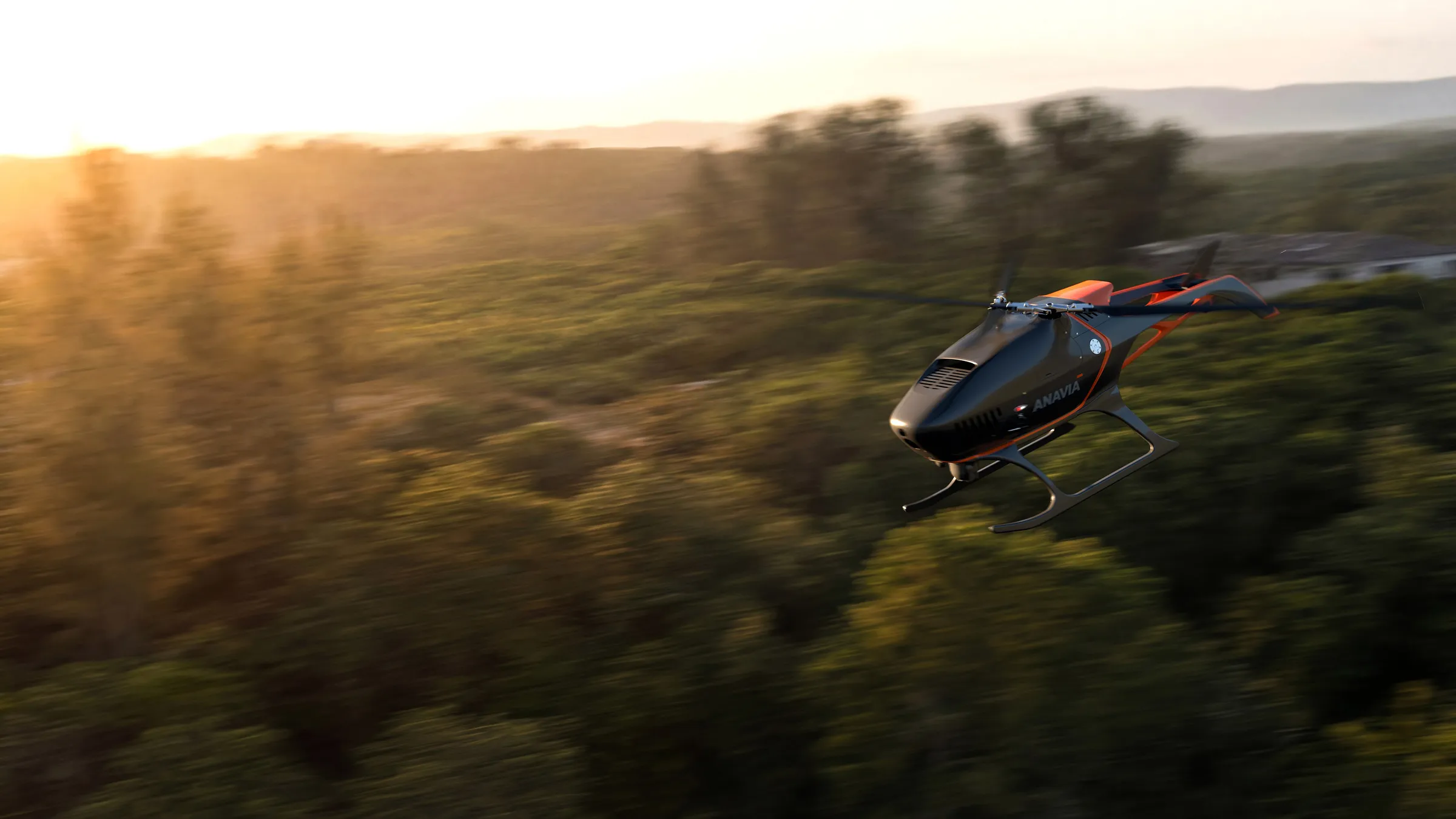
HT-100
The Next Generation of Heavy-Duty Unmanned Helicopters
The ANAVIA HT-100 is a Swiss-engineered unmanned VTOL helicopter with a 120 kg MTOW, 60 kg payload capacity, and 6-hour endurance. Powered by a 15 kW shaft turbine burning JET A-1 fuel, its Flettner intermeshing rotor system delivers exceptional stability, efficiency, and modularity for ISR, search and rescue, logistics, and inspection missions.

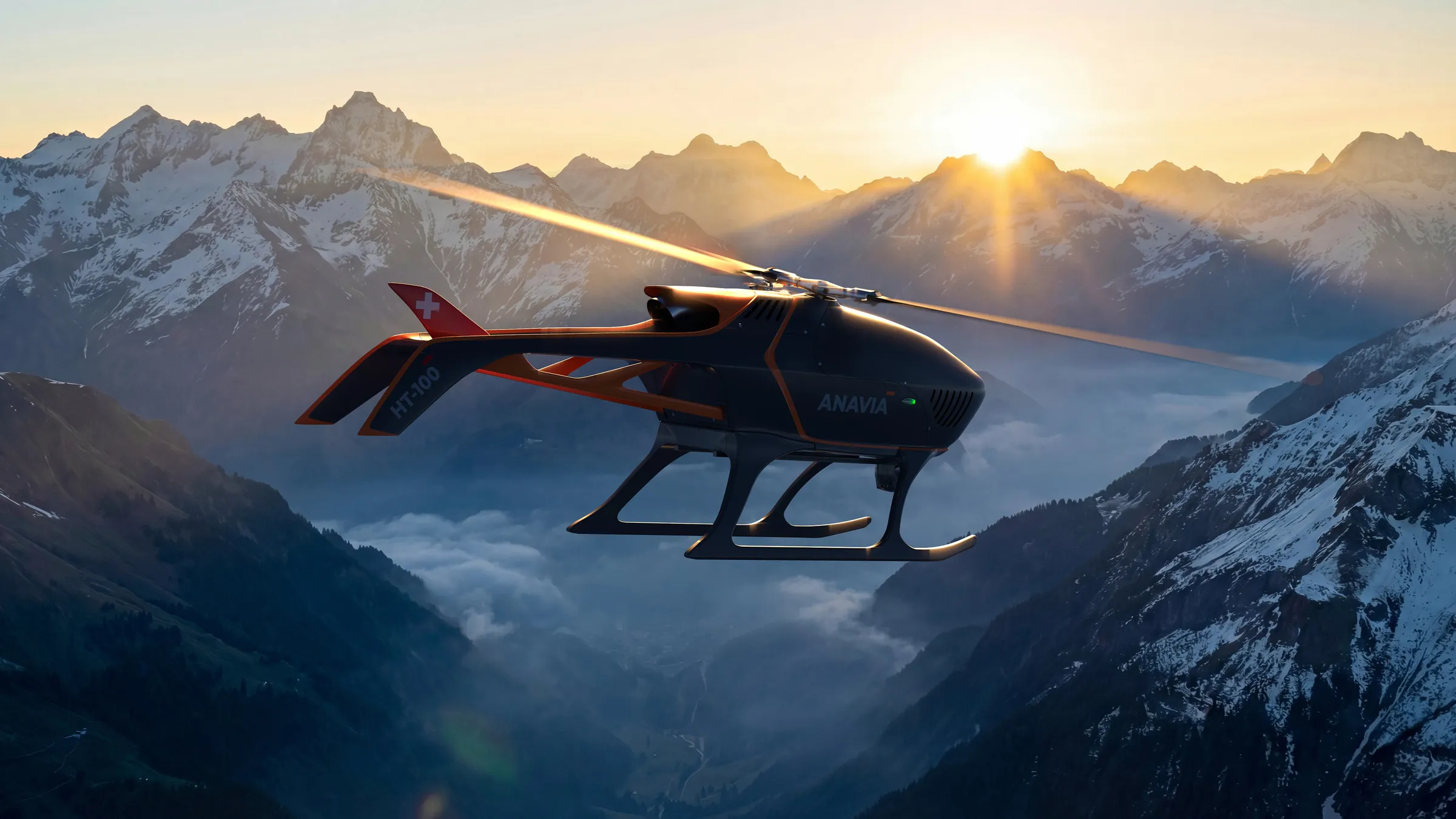
The Alternative to Manned Helicopters.
At a Fraction of the Cost.
Same ISR grade. Same cargo capacity. Same mission payloads. No crew at risk. 75% lower operational cost.
Engineered Like a
Manned Aircraft.
Flettner Rotors
Two intermeshing main rotors. No tail rotor. 30% more efficient — all saved energy goes to payload and endurance.
15 kW Turbine
1,000 FH TBO. 9 l/h fuel burn. Real-time monitoring. Lowest vibration in class.
Sealed Gearbox
92% efficiency. Self-lubricating. Sealed against sand and dust. 1,000 FH TBO.
Carbon Airframe
58 kg empty. 10+ year longevity. UV-protected. Lightest in its payload class.
Technical Data
Flight
Performance.
Endurance vs Payload
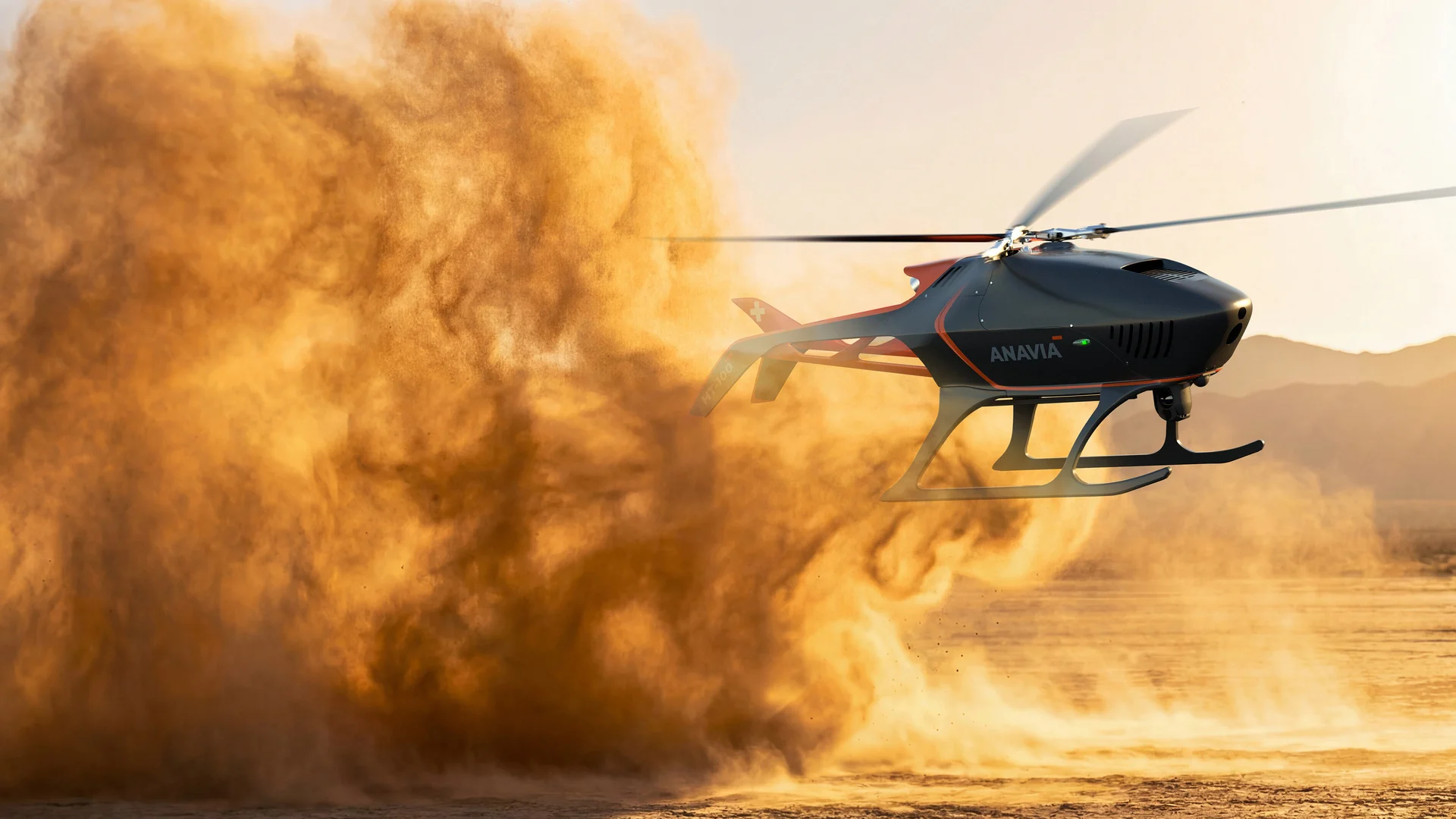
Common Questions About the HT-100
What is the ANAVIA HT-100?
The ANAVIA HT-100 is a Swiss-engineered unmanned VTOL helicopter with a 120 kg maximum take-off weight, 60 kg payload capacity, and 6-hour flight endurance. It uses a Flettner intermeshing rotor system — two counter-rotating main rotors with no tail rotor — powered by a 15 kW shaft turbine burning JET A-1 fuel at just 9 litres per hour.
How does the Flettner rotor system work?
The Flettner system uses two intermeshing main rotors spinning in opposite directions. This eliminates the need for a tail rotor, which means 30% more energy goes to useful lift instead of countering torque. The result is longer endurance, higher payload capacity, and significantly lower vibration — critical for stabilized sensor optics during ISR missions.
What fuel does the HT-100 use?
The HT-100 runs on standard JET A-1 aviation fuel, with JP-5 and JP-8 available on demand. Unlike battery-powered drones that lose capacity in cold weather and require hours to recharge, the turbine engine delivers consistent performance from -25°C to +55°C and can be refuelled in minutes for immediate redeployment.
What payloads can the HT-100 carry?
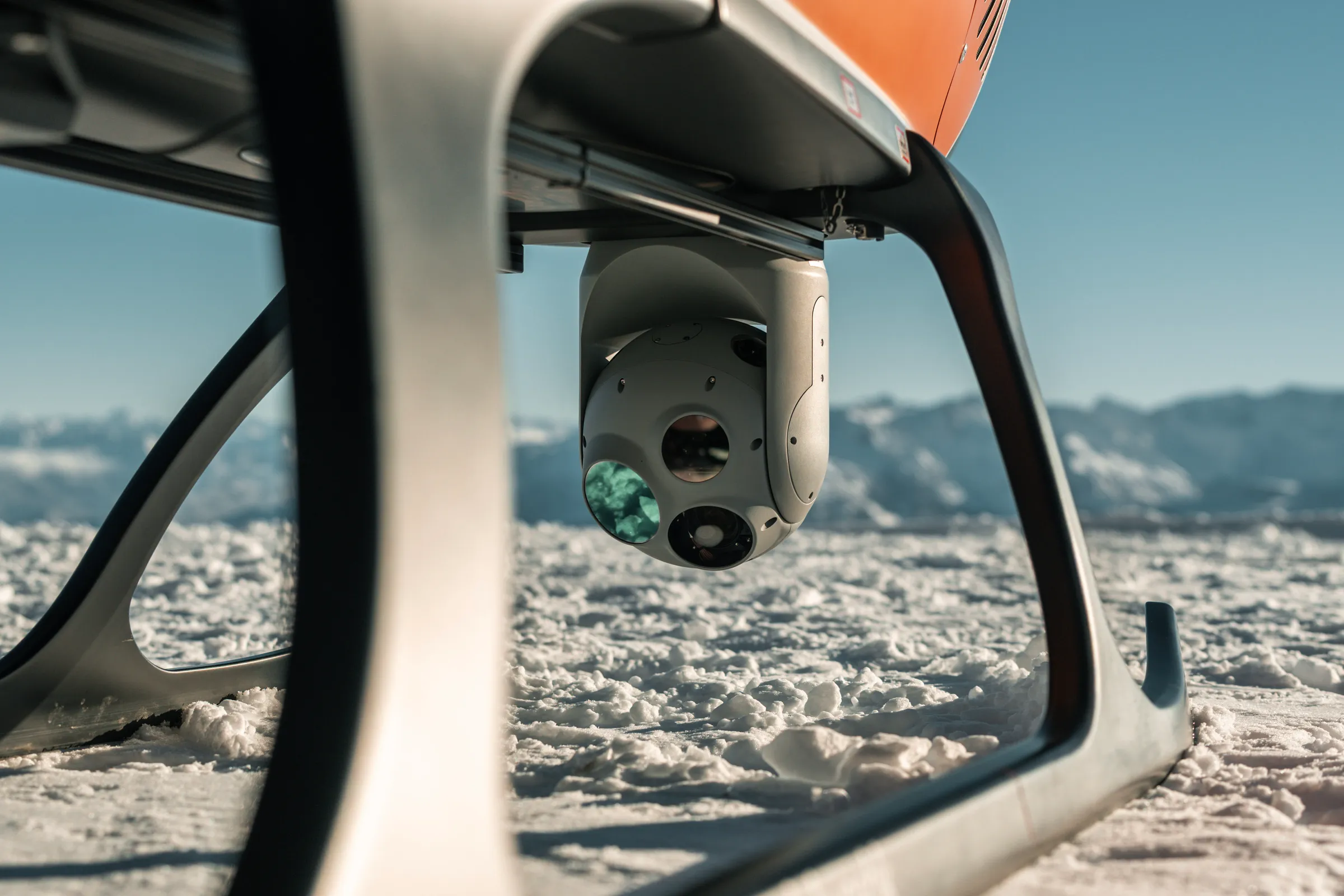
The HT-100 supports modular plug-and-play payload integration via its avionics bus — swap any sensor in under 15 minutes. Compatible payloads include EO/IR surveillance cameras (67x optical zoom, cooled MWIR thermal), wide-area search sensors, LiDAR mappers, hyperspectral/multispectral imagers, emissions detection systems, COMINT equipment, 100MP RGB cameras, and cargo boxes up to 50 kg / 90 litres.
How far can the HT-100 fly on a single mission?
The HT-100 has a maximum mission distance of 600 km with a data link range of up to 200 km using terrestrial radio. With optional LTE or SATCOM connectivity, the control range is effectively unlimited. At cruise speed of 100 km/h, it can sustain 6 hours of continuous flight with a 14 kg payload.
Deploy the
HT-100.
Configure with mission-specific payloads, or speak directly with our team.