

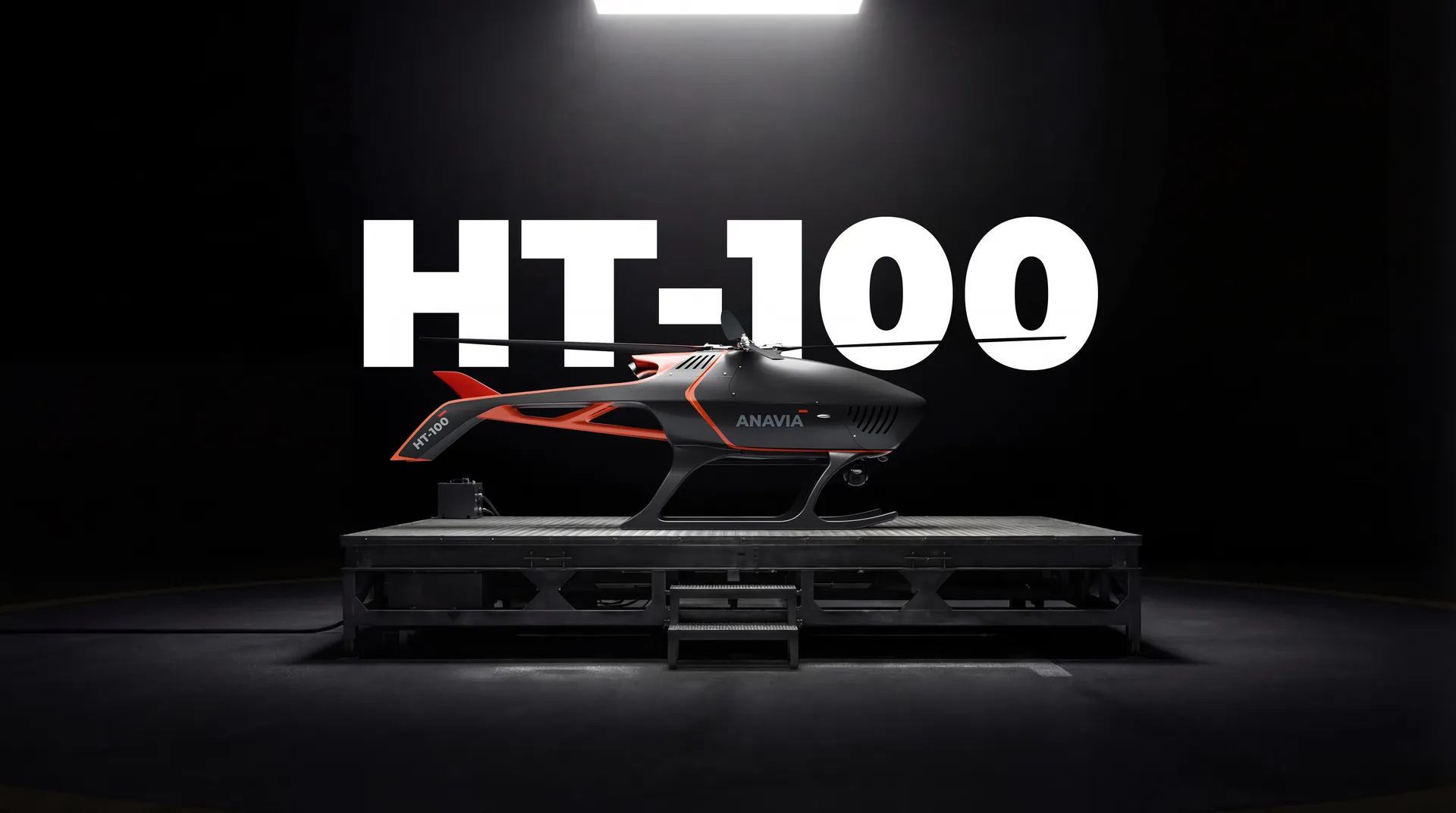
FLIGHT. PERFORMANCE.
UNMANNED. OPERATIONAL.
The world's most advanced unmanned helicopter systems. Autonomous VTOL UAVs for ISR, border patrol, maritime surveillance, search and rescue, and heavy-lift missions.
at risk.75% lower
operating cost.15 minutes
to deploy.Fully
autonomous.Takeoff.
Flight.
Landing.No pilot
required.
Your Mission. Our Platform.
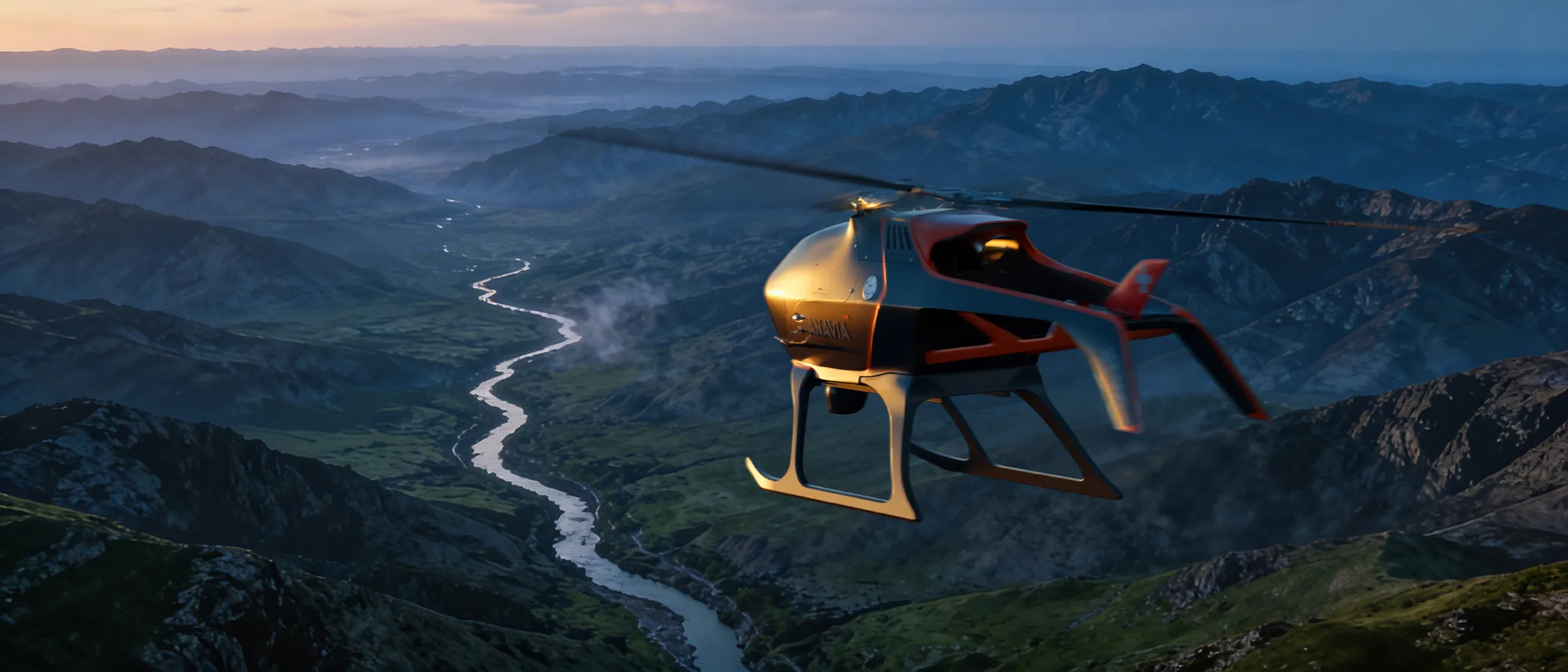
Defense & ISR
Persistent surveillance over borders and critical zones — day and night, in any weather — without putting pilots at risk.
Explore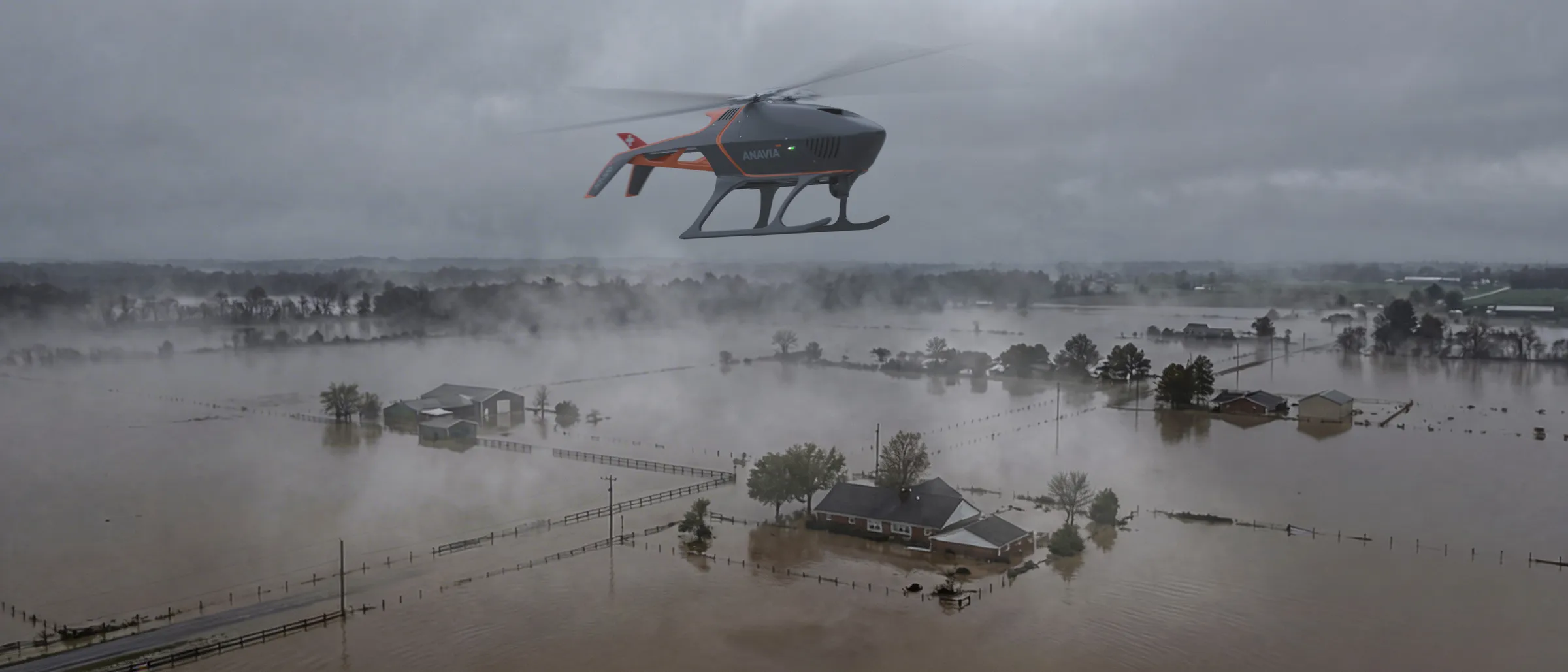
Search & Rescue
Airborne in 15 min with wide-area thermal imaging. Cover terrain that takes ground teams hours.
Explore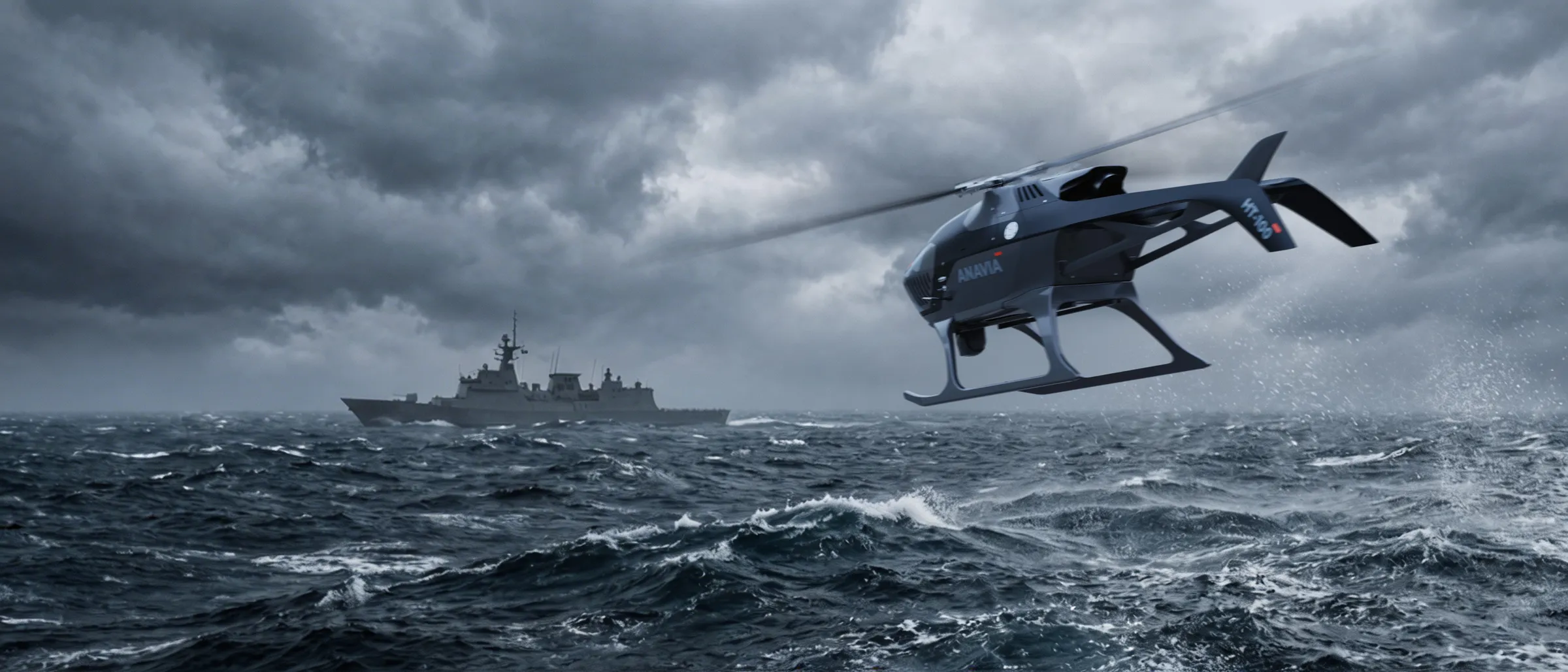
Naval
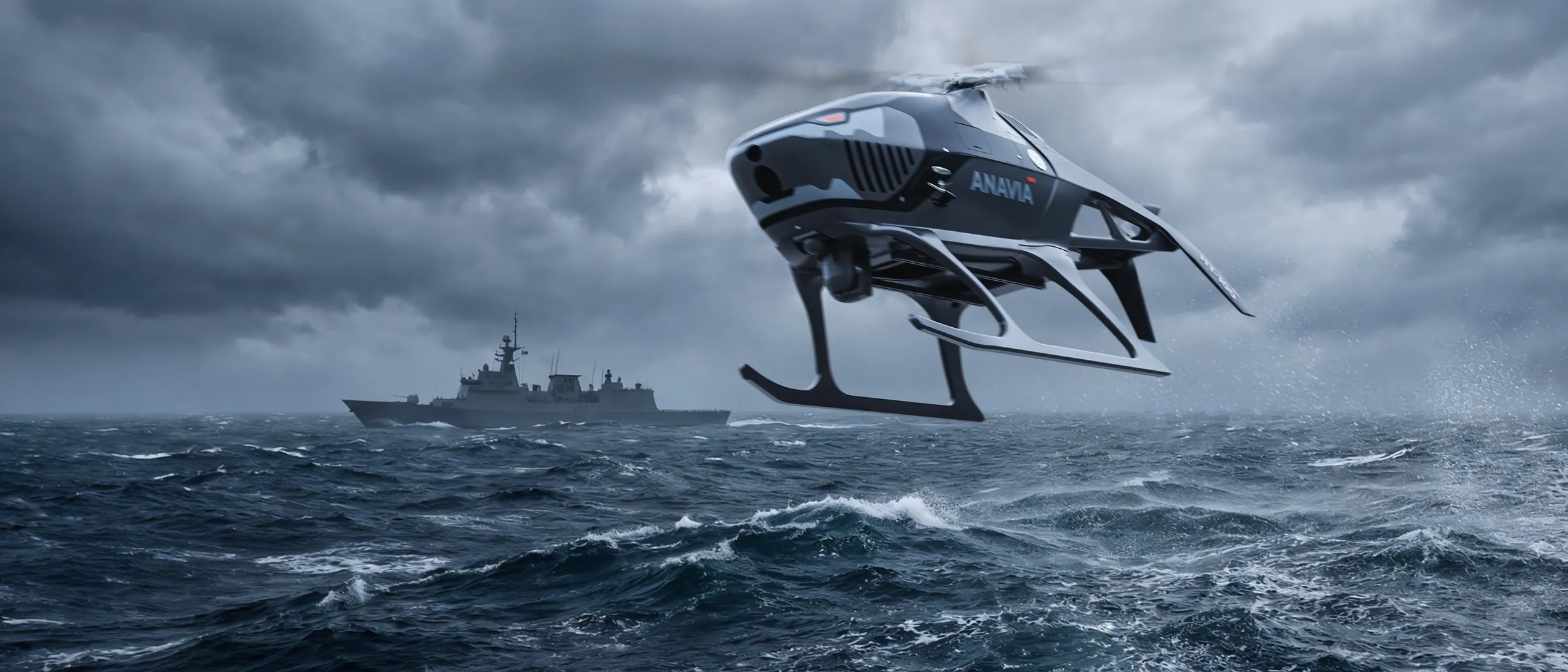
Autonomous deck-landing, EEZ patrol, and anti-piracy from any vessel class.
Explore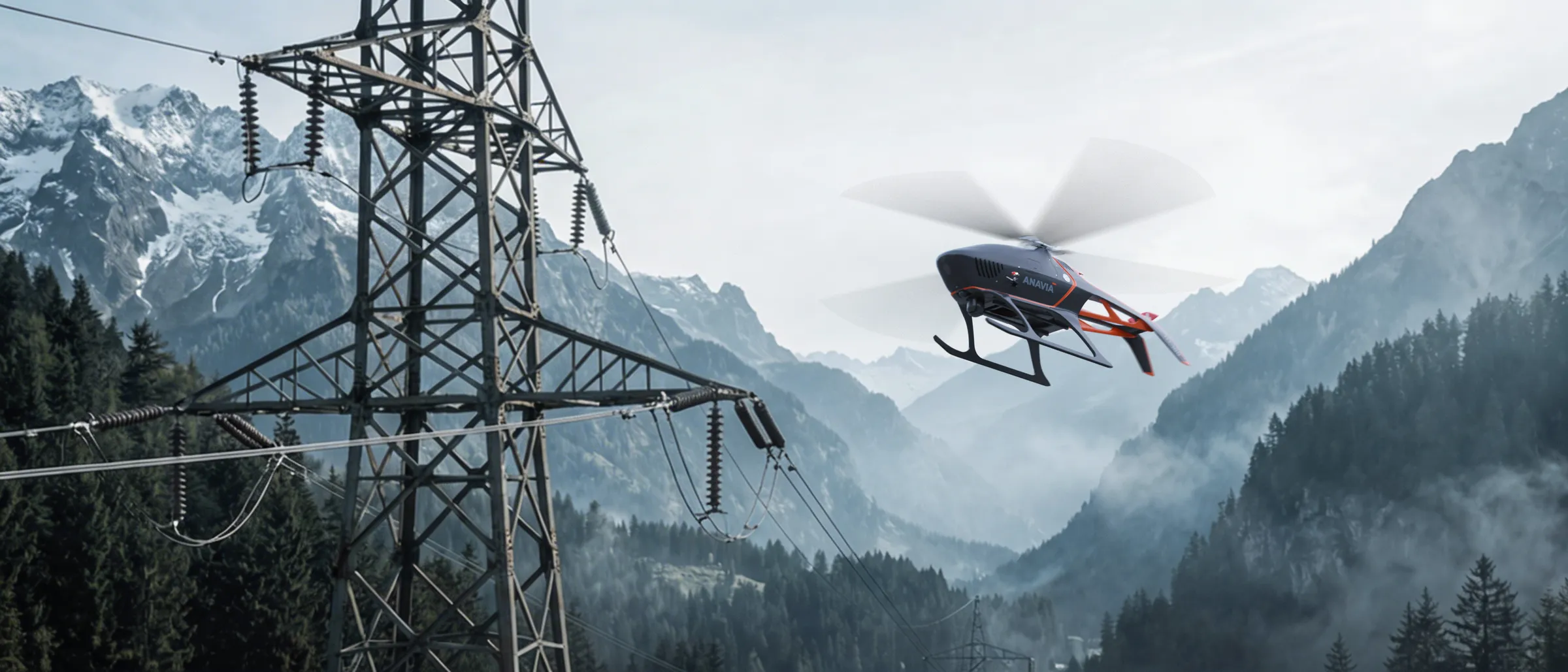
Inspection
Pipelines, power grids, offshore rigs — no shutdowns, no scaffolding.
Explore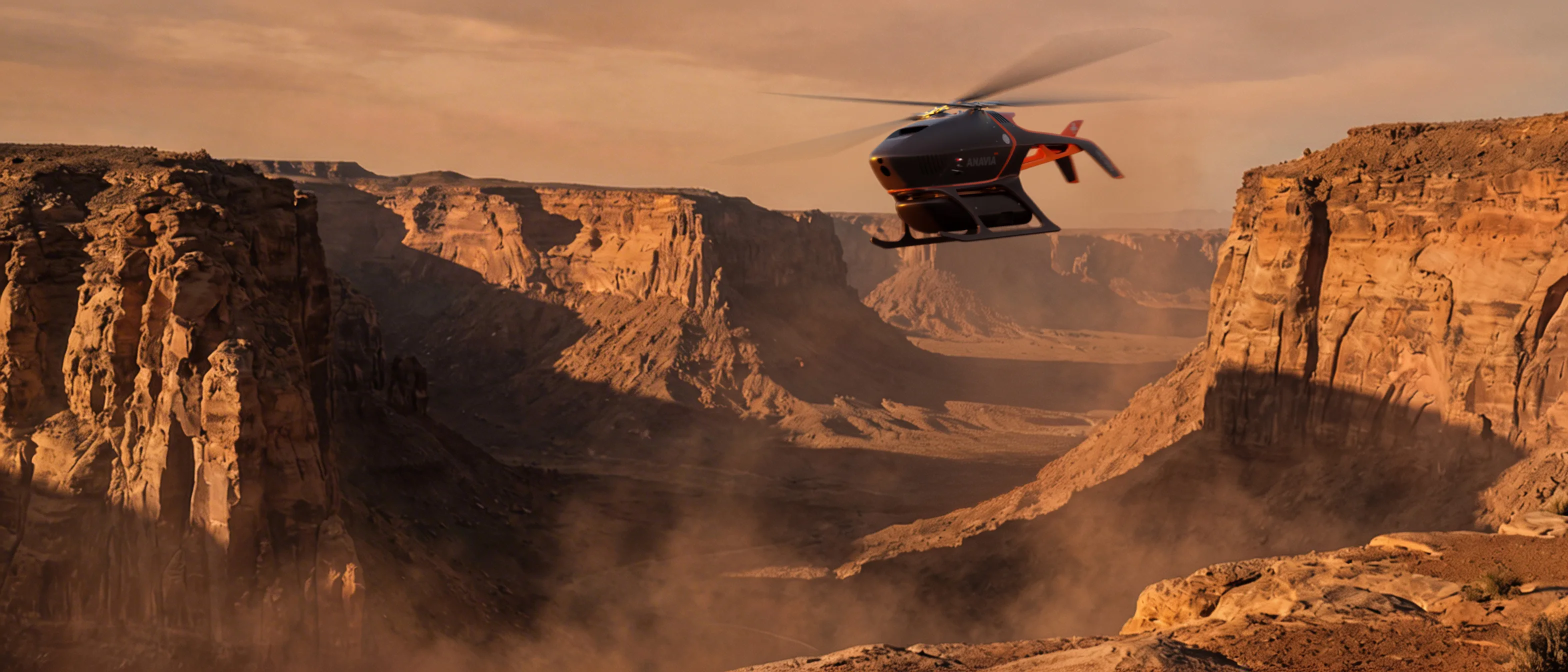
Logistics
50 kg to forward positions or disaster zones — no runway, no roads.
ExploreThe Alternative to Manned Helicopters.
At a Fraction of the Cost.
ANAVIA delivers the same mission capability as manned helicopters — unmanned, at 75% lower operational cost.
Unmanned vs Manned: Mission Comparison
Plug & Play
Sensor Integration.
One airframe, limitless configurations. Swap mission payloads in minutes — from surveillance optics to cargo delivery.
View All PayloadsEO/IR Surveillance
67x optical zoom, cooled MWIR thermal. Identify targets from 12+ km. Day and night operations.
Wide-Area Search
360° coverage with AI detection. Highest resolution LWIR on the market (1920×1200). Automated target interrogation.
LiDAR & 3D Mapping
32-channel LiDAR with 10mm accuracy. High-precision terrain mapping for infrastructure and geospatial intelligence.
Cargo & Logistics
Up to 50 kg / 90 L. Rugged carbon fiber cargo boxes or open load frames. Splash and dust proof.
Hyperspectral/Multispectral
164 spectral bands with dual-sensor aerial mapping. Panchromatic + spectral imaging in parallel.
Emissions Detection
Gas and radiation detection up to 150m range. Real-time data transmission. Automatic report generation.


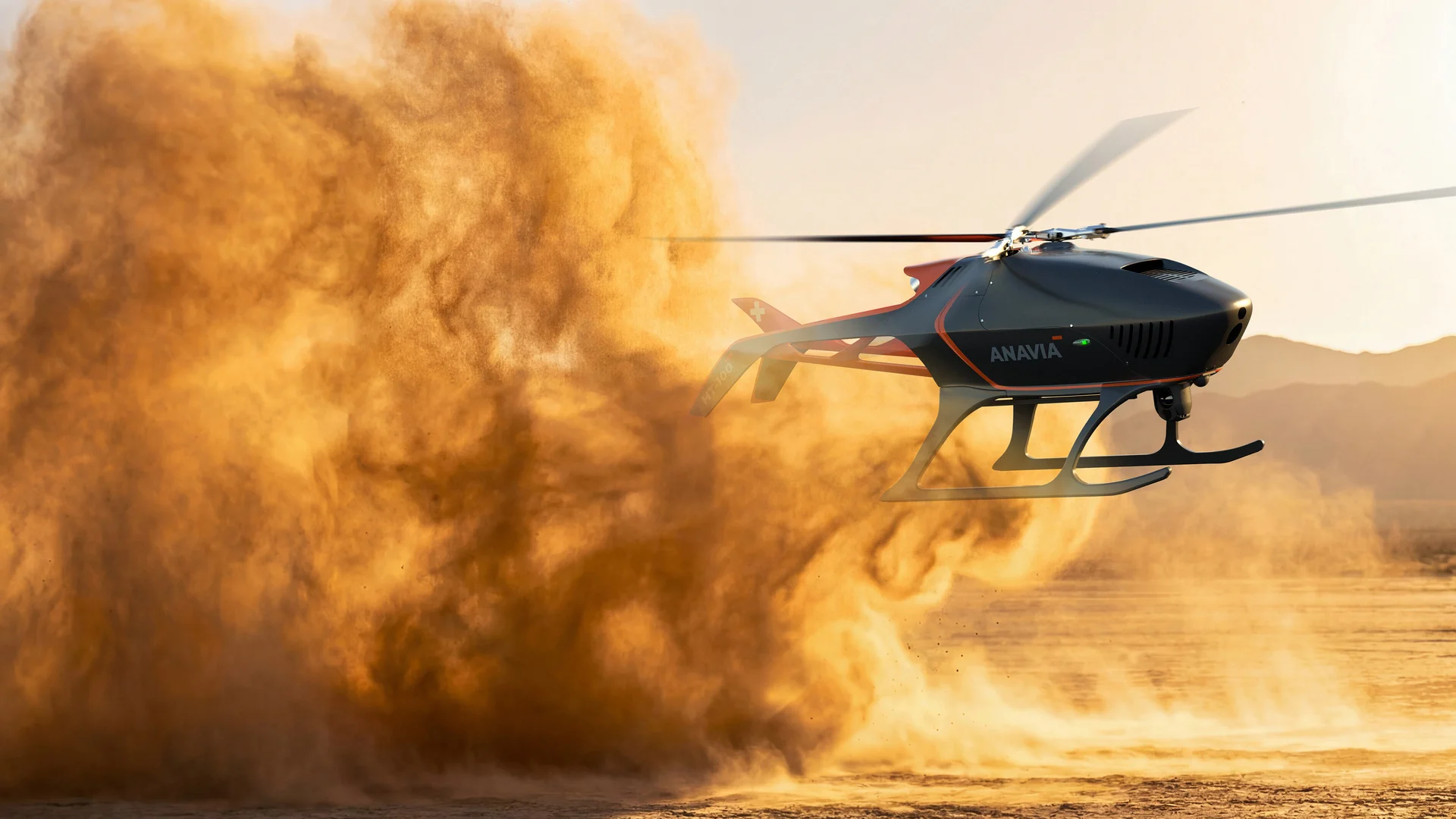
Arid & Desert
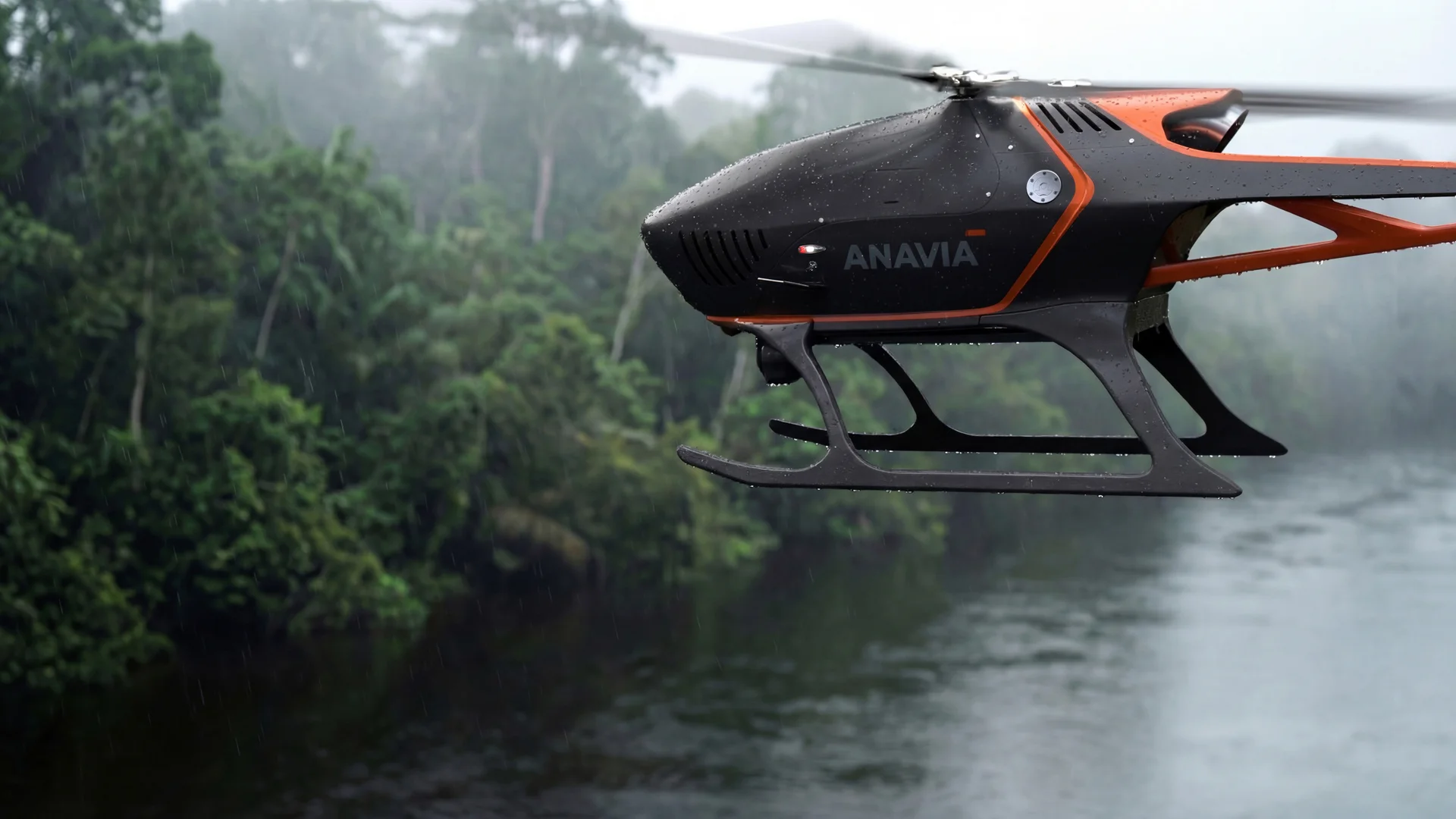
Extreme heat | Sand and dust | Sealed systemsTropical & Humid
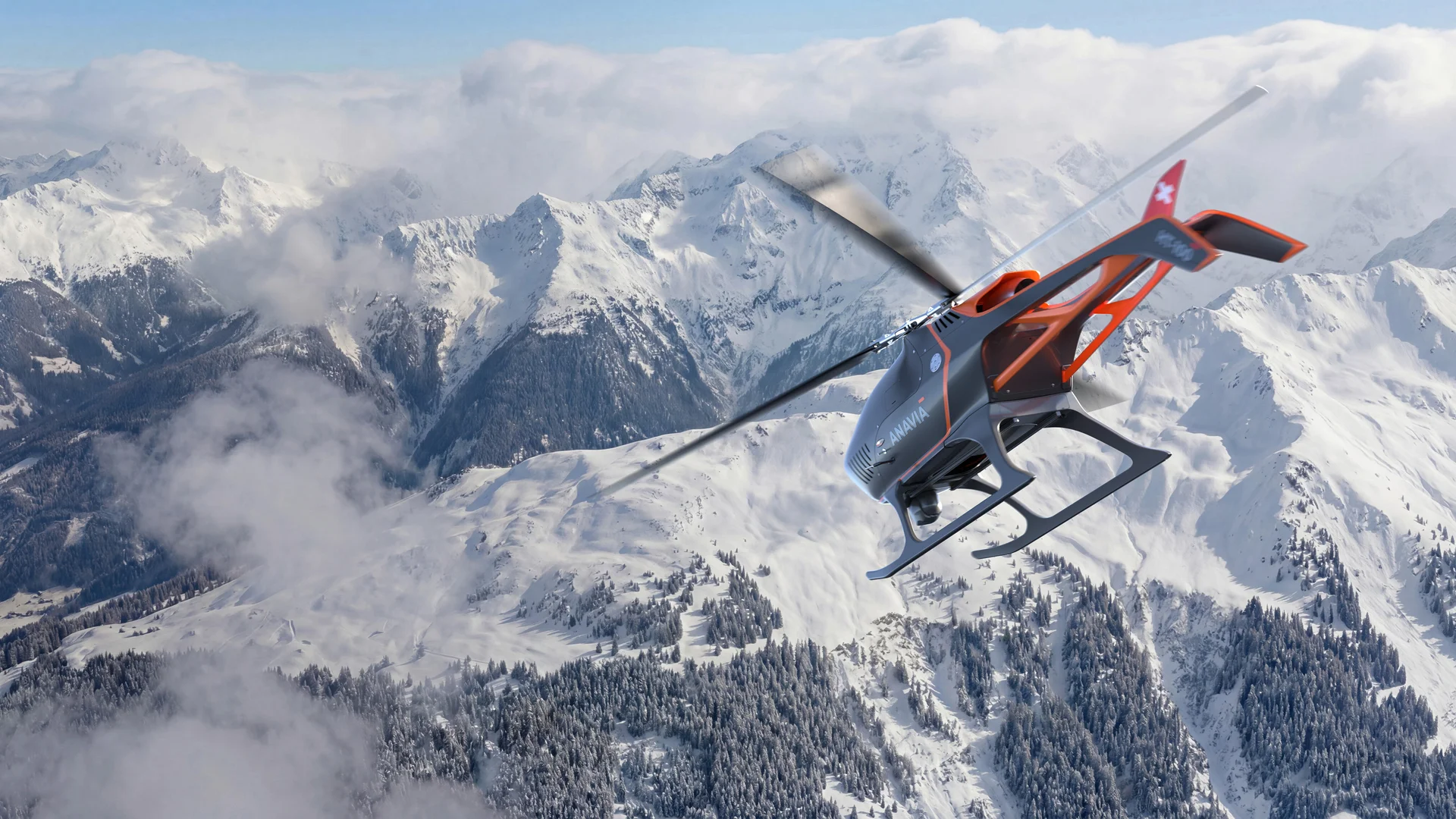
Sealed electronics | Rain-proof | All-weatherAlpine & High Altitude
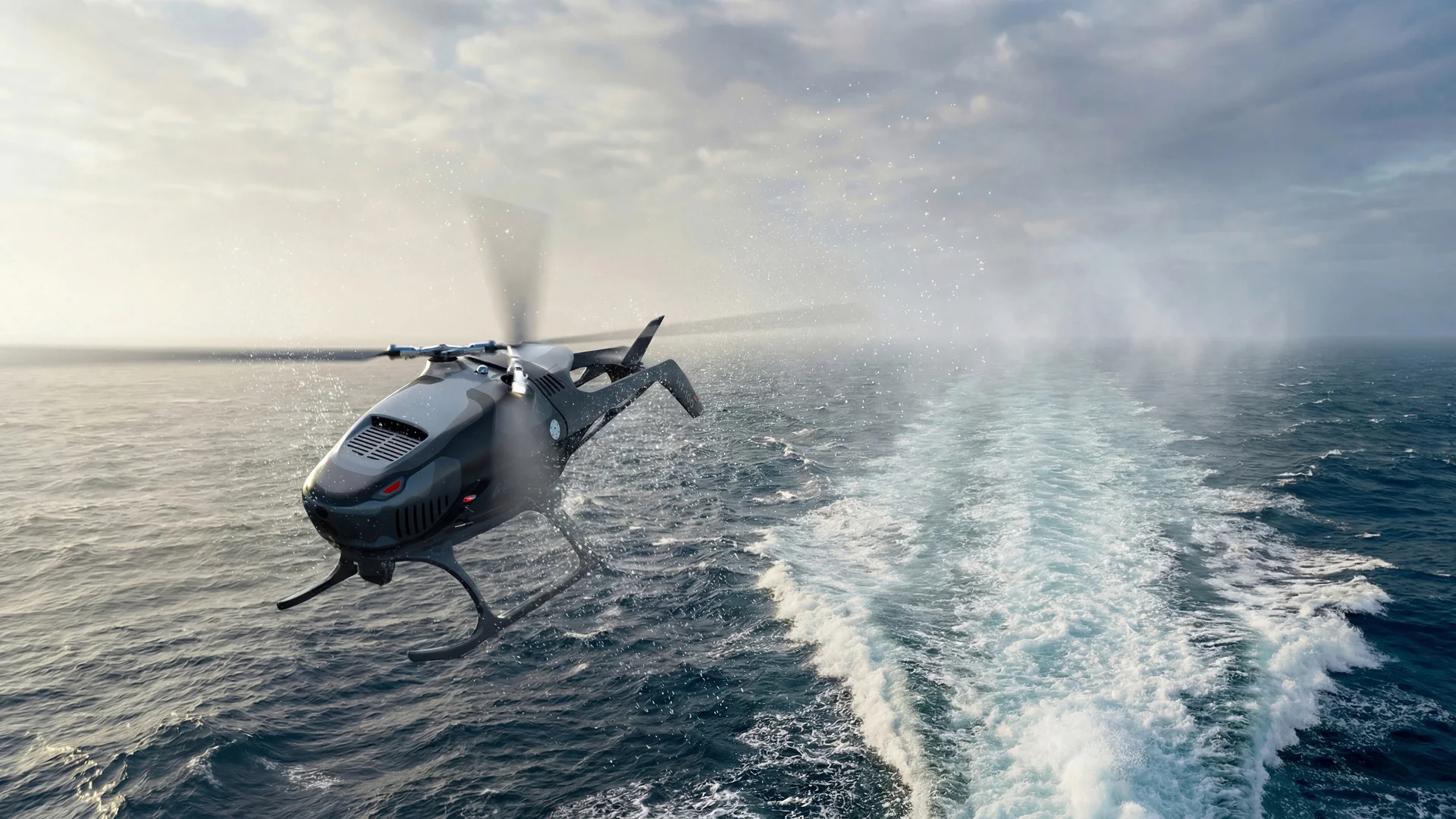
High altitude | No battery drain | Jet fuelNaval
Precise navigation | Low acoustic signature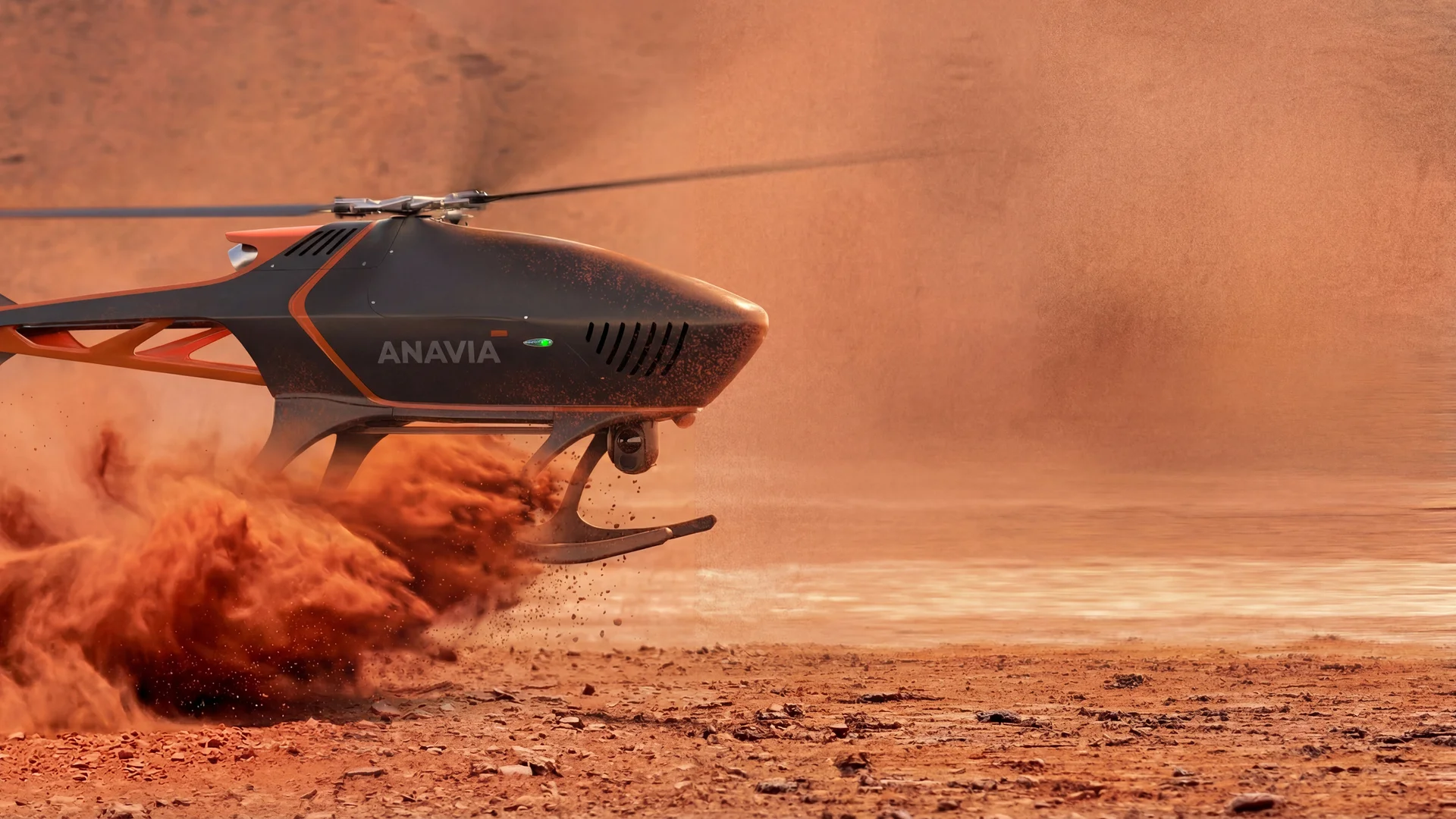
Engineered Like a Manned Aircraft.
Built to Fly Unmanned.
Flettner Intermeshing Rotors
Two counter-rotating main rotors. No tail rotor. 30% more efficient than conventional designs — all that saved energy goes to payload and endurance.
15 kW Shaft Turbine
Proven reliability with 1,000 flight-hour TBO. Only 9 l/h fuel burn. Real-time sensor monitoring. Lowest vibration in class — critical for stabilized optics.
Sealed Circumferential Gearbox
92% power transmission efficiency. Self-lubricating, sealed against sand and dust. 1,000 FH TBO. Operates reliably in the harshest environments on earth.
Carbon Composite Airframe
High-performance carbon fiber cell. 58 kg empty weight. 10+ year structural longevity. UV-protected finish. The lightest airframe in its payload class.
Mission Control
At Your Fingertips.
Mesh IP Tactical Radio
MANET networking, AES-256 encryption, up to 60 nodes. IP68 rated. 10W output power.
Active Tracking Dish
S-band MIMO, dual-axis tracking antenna. GPS, manual, and program tracking modes.
Tactical Datalink
Electronically steered beam. EW-resilient. Operates in GNSS-denied environments.
LTE / SATCOM
5G/4G cellular with 4x SIM redundancy. Inmarsat satellite for global coverage.
Operational
Readiness.
Guaranteed.
Supply Chain
Around-the-clock availability of spare parts and repairs. Maximum fleet uptime guaranteed.
Technical Support
Remote engineering support and diagnostics. Fast resolution for operational and technical issues.
Onsite Technical Support
ANAVIA field service engineers deployed to your location. Full repairs, maintenance, and operational support on-site.
Certified Training
Theory, simulation, and hands-on flight operations. Your crew leaves mission-independent with ANAVIA certification.
Predictive Maintenance
Real-time sensor monitoring ensures operational readiness and system availability. Defined maintenance schedules — you focus on the mission.
Common Questions About ANAVIA Systems
What is the ANAVIA HT-100?
The ANAVIA HT-100 is a Swiss-engineered unmanned VTOL helicopter with a 120 kg maximum take-off weight, 60 kg payload capacity, and 6-hour flight endurance. It uses a unique Flettner intermeshing rotor system powered by a 15 kW shaft turbine burning JET A-1 fuel at just 9 litres per hour. It is designed for ISR, search and rescue, logistics, and inspection missions.
How far can the ANAVIA HT-100 fly?
The HT-100 has a maximum flight mission distance of 600 km and a data link range of up to 200 km using terrestrial radio. With LTE or SATCOM connectivity, the operational range is effectively unlimited. Cruise speed is 100 km/h with a maximum airspeed of 120 km/h.
Is ANAVIA ITAR free?
Yes. ANAVIA systems are fully ITAR free — they contain no US-origin components subject to International Traffic in Arms Regulations. This means customers can procure, deploy, and export ANAVIA helicopters without US government restrictions, enabling faster acquisition and unrestricted global deployment.
What is the difference between the HT-100 and HT-750?
The HT-100 is a 120 kg MTOW tactical unmanned helicopter optimized for ISR and light logistics with 60 kg payload and 6-hour endurance. The HT-750 is a 1,150 kg MTOW heavy-lift platform with 750 kg payload capacity, 15-hour endurance, and 222 km/h max speed — designed for heavy cargo, personnel transport, and large-area ISR missions.
Can the HT-100 operate from ships?
Yes. The HT-100 Naval variant features a fully autonomous radar-guided deck landing system, corrosion-resistant airframe with sealed electronics, marine-grade surface treatments, and emergency equipment including harpoon, floats, and ELT. It can operate from corvettes to carriers in up to Sea State 3 conditions.
How much does an unmanned helicopter cost to operate?
The ANAVIA HT-100 operates at approximately 75% lower operational cost than a basic manned helicopter performing equivalent ISR or logistics missions. Operating costs are lower because there is no crew to deploy, fuel consumption is just 9 litres per hour (JET A-1), training costs are approximately 90% cheaper, and maintenance intervals are predictive with 1,000-hour TBO. The total cost of ownership includes the aircraft, ground control station, training, and a maintenance support package.
What is the difference between a drone and an unmanned helicopter?
The term "drone" typically refers to small, battery-powered multirotor aircraft with 20–45 minutes of flight time and 2–5 kg payloads. An unmanned helicopter like the ANAVIA HT-100 is a turbine-powered rotary-wing aircraft built to manned helicopter standards — delivering 6 hours of endurance, 60 kg payload capacity, and operation in extreme weather from -25°C to +55°C. The drone vs helicopter distinction matters for mission planning: drones suit short-range visual inspections, while unmanned helicopters serve as an alternative to crewed aircraft in persistent ISR, maritime patrol, search and rescue, and heavy logistics.
Where is ANAVIA headquartered?
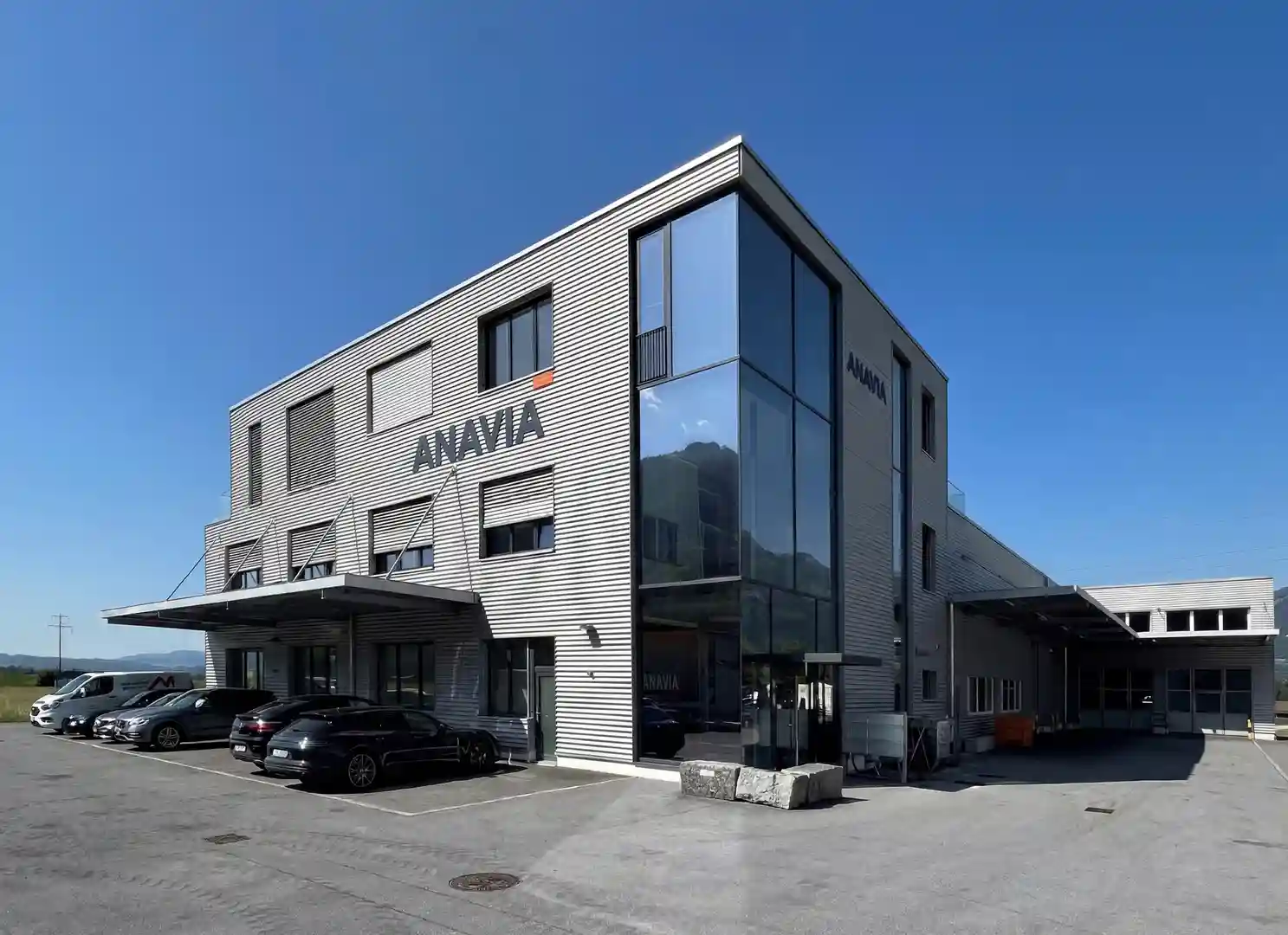
ANAVIA AG is headquartered at Bahnhofstrasse 37, CH-8752 Näfels, Switzerland, approximately 40 minutes from Zurich. The company operates development and manufacturing facilities in Näfels and Bilten, with a team of 75+ multidisciplinary engineers. ANAVIA is part of EDGE Group PJSC, a UAE-based advanced technology and defense conglomerate.
Schedule a
Mission
Assessment.
Speak directly with an ANAVIA mission specialist. We'll assess your operational requirements and recommend the right system configuration — no obligation.
- Tailored system configuration for your mission profile
- Full technical specifications and payload options
- Procurement timeline, pricing, and training plan
- Direct access to engineering and operations team
ANAVIA AG
Bahnhofstrasse 37
CH-8752 Näfels, Switzerland
+41 55 552 23 04